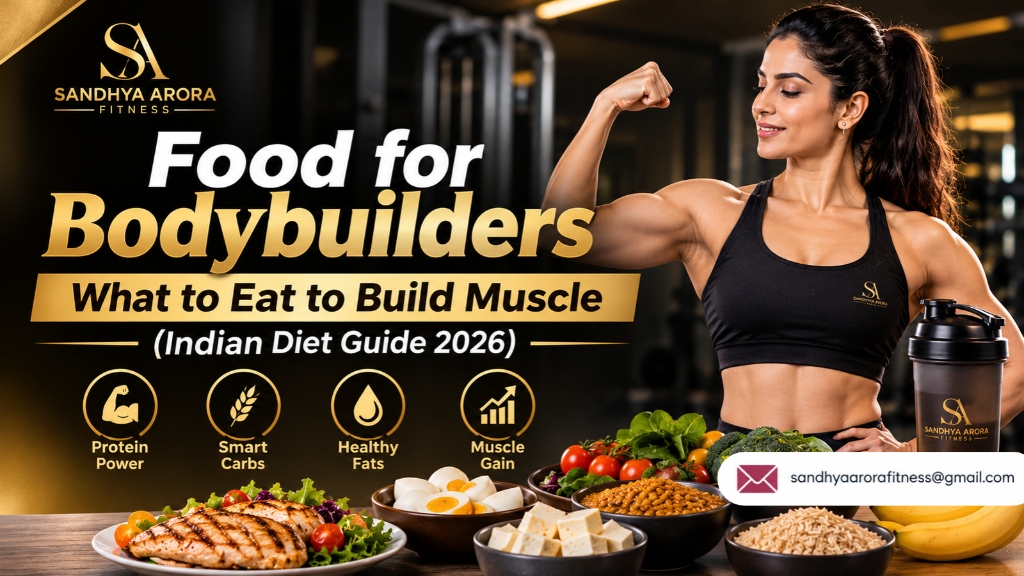
The best food for bodybuilders is wholesome, nutrient-dense whole food you can consume consistently day after day: high-bioavailability proteins (whole eggs, chicken breast, fish, low-fat paneer, hung curd, soya chunks, and lentils), slow-digesting complex carbohydrates (basmati rice, rolled oats, sweet potatoes, and whole wheat rotis), and essential unsaturated fats (peanuts, nuts, seeds, and moderate ghee).
To pack on lean muscle without accumulating excess body fat, maintain a controlled 10% to 20% calorie surplus above your maintenance requirements, hit 1.6 to 2.2 grams of protein per kilogram of body weight daily, and distribute your protein evenly across 3 to 5 meals containing at least 2.5 to 3.5 grams of leucine each. You do not need expensive imported superfoods or unpalatable boiled meals; authentic Indian home cooking can comfortably fuel world-class muscular hypertrophy when macros are dialed in.
Step inside virtually any commercial gym or local akhada across India—whether in Delhi, Mumbai, Bengaluru, or Chandigarh—and you will inevitably be greeted by a barrage of dogmatic dietary dogmas. One self-proclaimed gym veteran insists that you must boil all your poultry until it tastes like cardboard and drink sixteen raw egg whites. Another adamantly commands you to swear off rotis and white rice forever because "carbs make you soft." A third urges you to buy a shelf full of mass gainer tubs, claiming that home-cooked Indian meals cannot build serious muscle.
Let us clear the air immediately: muscle tissue is synthesized in the gym through progressive overload, but it is manufactured, repaired, and fueled in the kitchen. The human body operates on immutable bioenergetic principles of exercise physiology and nitrogen balance. Peer-reviewed sports science provides crystal-clear benchmarks for caloric surpluses, amino acid kinetics, and glycogen replenishment. Crucially, you do not need imported Alaskan salmon, exotic berries, or tasteless boiled chicken to achieve an aesthetic, muscular physique.
Everyday Indian kitchen staples—fresh eggs, tender chicken, local fish, rich paneer, hung curd, soya chunks, hearty dals, basmati rice, potatoes, and seasonal sabzi—provide all the essential amino acids, glycogen substrate, and micronutrients needed to support maximal hypertrophy. In this comprehensive 2026 bodybuilding nutrition guide, we will unpack the exact science of muscle-building nutrition, evaluate the 12 best bodybuilding foods, calculate your custom macronutrients, and provide full-day vegetarian and non-vegetarian meal plans tested through a decade of real-world coaching experience.
Gym Locker-Room Myths vs Science: How Food Actually Builds Muscle
Before counting a single gram of protein or setting a kitchen scale on your counter, it is vital to understand the biological mechanism that turns the food you chew into dense muscular tissue. Lifting heavy barbells and dumbbells does not directly grow muscle; rather, it induces mechanical tension, local metabolic stress, and microscopic myofibrillar trauma. This resistance training sends an intracellular signal known as the mechanistic target of rapamycin (mTOR) cascade, which tells your body: "We encountered a mechanical load we were unprepared for; synthesize more contractile protein filaments (actin and myosin) so we survive this stress next time."
However, the mTOR pathway is simply a contractor holding a blueprint. Without building bricks (essential amino acids) and physical energy to pay the laborers (calories from carbohydrates and fats), muscle protein synthesis (MPS) cannot exceed muscle protein breakdown (MPB). When MPB outpaces MPS over a 24-hour cycle, your net protein balance remains negative, and you fail to grow—or worse, you burn hard-earned muscle tissue for fuel.
Many lifters believe they can overcome poor nutrition simply by training harder, spending two hours doing endless drop sets and giant sets. Yet as we examine in our guide on why you might be working out without seeing physical changes, systemic recovery and hormonal health dictate your true rate of adaptation. When you supply your bloodstream with a continuous stream of amino acids, replenish depleted intramuscular glycogen stores, and supply healthy dietary fats to sustain anabolic endocrine function, your body responds with rapid recovery and muscular hypertrophy.
The Caloric Surplus Equation: Lean Bulking vs. The Outdated "Dirty Bulk"
The single most destructive trend that has plagued amateur bodybuilding for decades is the traditional 1990s "dirty bulk." Lifters use the muscle-gain phase as an excuse to gorge on whatever high-calorie foods they encounter—fried snacks, processed junk food, fast-food burgers, sugary mithai, and double portions of heavy gravies—under the false belief that "all weight gain is good weight gain."
The biological limit of natural muscle synthesis is finite. A novice lifter under optimal training and recovery conditions can synthesize approximately 0.9 to 1.5 kg of actual muscle tissue per month in their first year of dedicated lifting. For an intermediate athlete with two to four years of consistent training, that rate slows to roughly 0.4 to 0.8 kg per month. Advanced lifters celebrate gaining 0.2 to 0.4 kg of pure contractile tissue over an entire month.
When you consume a massive caloric surplus (such as 800 to 1,200 calories above maintenance), your rate of muscle growth does not magically double or triple. Instead, the excess caloric energy is partitioned directly into adipose tissue (body fat), particularly visceral fat around internal organs and stubborn abdominal subcutaneous depots. Excessive adiposity leads to systemic low-grade inflammation, impaired insulin sensitivity, elevated aromatase activity (which converts free testosterone into estrogen), and a bloated, lethargic physical state that makes subsequent fat loss significantly harder.
To avoid this trap, modern sports nutrition relies on the lean surplus (also known as a controlled athletic surplus). In an authoritative 2019 sports nutrition review published in the journal Sports by researchers Juma Iraki, Peter Fitschen, Sergio Espinar, and Eric Helms, the authors evaluated off-season dietary strategies for natural bodybuilders. Their conclusion was definitive: a conservative caloric surplus of 10% to 20% above maintenance energy expenditure is optimal for maximizing muscle hypertrophy while keeping fat accumulation negligible.
For most intermediate and advanced strength athletes, a modest daily surplus of 250 to 400 calories provides all the metabolic substrate required to drive protein accretion without burdening the cardiovascular system or overloading lipid metabolism. For detailed nutritional strategies specifically tailored to hypertrophy phases, explore our in-depth framework on nutrition for muscle gain.
Evidence-Based Macro Targets: Calories, Protein, Carbs & Fats
Once you understand your total daily caloric requirement, the next step is allocating those calories into their specific macronutrient constituents: protein, carbohydrates, and dietary fats. Each macronutrient plays an irreplaceable role in muscular hypertrophy, neurological output, and hormonal homeostasis.
Here is how the scientific consensus structures macronutrient distribution for natural bodybuilding during an off-season or mass-building block:
Protein (1.6 – 2.2 g / kg)
Protein delivers the essential amino acids required to repair damaged myofibers and trigger new muscle protein synthesis. Supplying 1.6 to 2.2 grams per kilogram of body weight provides an ample safety ceiling for hard-training lifters without placing unnecessary burden on digestive efficiency.
At 4 calories per gram, a 70 kg athlete consuming 140 g of protein allocates 560 calories to protein.
Carbohydrates (3.0 – 5.0+ g / kg)
Carbohydrates are the primary fuel source for anaerobic glycolysis—the cellular pathway that powers high-intensity resistance training. Carbs saturate muscle glycogen, preserve cellular hydration, stimulate anabolic insulin, and prevent muscle tissue from being oxidized for fuel.
Carbohydrates supply 4 calories per gram and should make up the majority of remaining calories.
Dietary Fats (0.5 – 1.5 g / kg)
Dietary fats are indispensable for endocrine function. Cholesterol and fatty acids serve as the biochemical building blocks for steroid hormones, including testosterone and growth factors. Fats also facilitate the absorption of vital fat-soluble vitamins (A, D, E, and K).
Supplying 9 calories per gram, dietary fat should generally account for 20% to 30% of total caloric intake.
To see how these principles apply in practice, let us examine an evidence-based daily macronutrient breakdown for a 70 kg natural lifter whose baseline maintenance sits at 2,400 calories per day:
| Nutrient Dimension | Evidence-Based Guideline | Practical Application (70 kg Lifter) | Total Calories |
|---|---|---|---|
| Caloric Target | Maintenance + 10% to 15% Surplus | 2,650 – 2,750 kcal / day | ~2,700 kcal |
| Daily Protein | 2.0 g per kg body weight | 140 – 150 g / day | 580 kcal (21.5%) |
| Daily Dietary Fat | 0.9 – 1.0 g per kg body weight | 65 – 70 g / day | 610 kcal (22.5%) |
| Daily Carbohydrates | Remaining calories (~5.3 g / kg) | 370 – 380 g / day | 1,510 kcal (56.0%) |
| Target Weight Rate | 0.25% to 0.50% of body weight / week | 175 g to 350 g / week | ~0.7 – 1.4 kg / month |
If you weigh 60 kg or 85 kg, simply scale these numbers proportionally to your body weight. Notice that carbohydrates dominate the caloric distribution. In our 1-on-1 nutrition coaching programs, we frequently observe lifters who stall in muscle growth not because their protein is too low, but because they have unnecessarily slashed their carbohydrate intake, leaving their muscle cells depleted of glycogen and their training intensity severely compromised.
How Much Protein Do Bodybuilders Really Need? (The Science of MPS and the Leucine Threshold)
No nutrient has generated more debate, superstition, and commercial hyperbole than dietary protein. Commercial supplement companies frequently promote astronomical figures—often urging lifters to consume 3.0 to 4.0 grams per kilogram of body weight (or "2 grams per pound"). But does scientific research support these massive intakes?
In 2018, Dr. Robert Morton, Professor Stuart Phillips, and their colleagues conducted the largest meta-analysis to date on protein intake and muscle hypertrophy, published in the prestigious British Journal of Sports Medicine. The researchers analyzed 49 randomized controlled trials encompassing 1,863 resistance-trained participants. Their findings were groundbreaking:
Consuming protein beyond roughly 2.2 grams per kilogram of body weight yielded no statistically significant increase in fat-free muscle mass accretion. Any excess amino acids consumed beyond the body's functional threshold are simply deaminated by the liver, converted to urea, and excreted or burned as an expensive fuel source. While an intake slightly above 2.2 g/kg is completely safe for healthy kidneys, it offers no additive hypertrophic advantage and often crowds out valuable carbohydrates that could have fueled heavier squats, bench presses, and deadlifts.
Understanding the "Leucine Trigger" and Meal Frequency
It is not merely the total amount of protein you eat across 24 hours that matters; how you distribute that protein throughout your waking hours plays an equally pivotal role. Muscle protein synthesis operates like a biological light switch. You cannot turn a light switch "half on"—it requires a specific threshold of an essential branched-chain amino acid called leucine (typically 2.5 to 3.5 grams per feeding) to stimulate the cell's ribosomal machinery.
Once this leucine threshold is met, MPS spikes for approximately 2.5 to 3.5 hours before returning to baseline, regardless of how much additional protein remains in your stomach. This physiological phenomenon is known as the muscle full effect. Therefore, saving all your daily protein for a massive 100-gram chicken or paneer dinner is biologically inferior to distributing your daily target across 3 to 5 evenly spaced feedings of approximately 0.40 to 0.55 g of protein per kg of body weight (roughly 28 to 38 grams per meal for a 70 kg individual).
For a detailed breakdown of amino acid kinetics, read our comprehensive guide on protein requirements for athletic performance.
The 12 Best Muscle-Building Foods for Bodybuilders (With Bioavailability & Indian Kitchen Insights)
Now that we have established the physiological rules of calories, macros, and protein kinetics, let us examine the 12 best whole foods to construct your bodybuilding shopping list. Each of these foods has been chosen for its nutrient density, amino acid bioavailability, digestive tolerance, and seamless fit within everyday Indian home cooking.
1. Whole Eggs & Egg Whites (The Biological Reference Standard)
Whole eggs possess a biological value (BV) of 100 and a Protein Digestibility-Corrected Amino Acid Score (PDCAAS) of 1.0, making them the gold standard against which all other proteins are measured. One large whole egg delivers approximately 6.0 to 6.3 grams of complete protein, accompanied by 5 grams of healthy lipid emulsion in the yolk.
Never discard all your egg yolks unless you are cutting calories drastically. The yolk contains roughly half the egg's protein, as well as essential micronutrients like choline (critical for neurological acetylcholine production and liver fat transport), vitamin D3, zinc, lutein, and bioavailable cholesterol that supports androgen production. A winning strategy for bodybuilders is combining 2 to 3 whole eggs with 4 to 6 egg whites. This delivers 28 to 36 grams of pure, high-leucine protein with moderate fat and minimal prep time.
2. Skinless Chicken Breast (Maximum Lean Protein Density)
Chicken breast is the classic staple of global bodybuilding for a clear physiological reason: unmatched protein purity. A 100-gram cooked portion of skinless chicken breast delivers roughly 31 grams of complete protein with less than 3 grams of fat and zero carbohydrates, providing over 80% of its total calories purely from protein.
In Indian homes, chicken breast often gets a bad reputation for becoming dry or rubbery when overcooked in boiling water. You do not need to eat bland boiled meat! Marinate diced chicken breast in low-fat hung curd, ginger-garlic paste, turmeric, Kashmiri red chilli, kasuri methi, and lemon juice, then air-fry, bake, or pan-sear on a cast-iron tawa with a light mist of mustard or olive oil. You get delicious, tender tandoori chicken that retains its juiciness while hitting precise macronutrient targets.
3. Fatty & White Fish (Rohu, Surmai, Katla, Pomfret, and Salmon)
Fish is an extraordinary muscle-building protein that is significantly easier to digest than red meats. Local Indian varieties like Rohu, Katla, Surmai (King Mackerel), and Pomfret provide between 18 and 24 grams of protein per 100 grams cooked.
Fatty cold-water and coastal fish (including salmon, mackerel, and surmai) also supply concentrated doses of marine omega-3 fatty acids (EPA and DHA). Omega-3s incorporate directly into the phospholipid bilayers of muscle cell membranes, improving nutrient transport, reducing exercise-induced muscular inflammation, and alleviating delayed-onset muscle soreness (DOMS). Prepare fish as a lightly pan-seared fillet or a gentle Bengali- or Goan-style curry cooked with minimal mustard oil and fresh curry leaves.
4. Paneer (Cottage Cheese) (Slow-Release Anabolic Casein)
For Indian vegetarian bodybuilders, fresh paneer is a foundational source of high-quality dairy protein. Standard dairy paneer contains approximately 18 to 19 grams of protein per 100 grams, composed primarily of micellar casein. Casein forms a gel in the acidic environment of the stomach, releasing amino acids slowly and steadily into the bloodstream over 5 to 7 hours.
Because full-fat paneer also contains 20 to 22 grams of milk fat per 100 grams, lifters who need to keep fats under control should look for low-fat paneer (prepared from toned or skimmed milk), which yields approximately 22 to 25 grams of protein with only 2 to 4 grams of fat per 100 grams. Enjoy paneer as a spicy morning paneer bhurji with onions and tomatoes, or grill it as paneer tikka skewers for an anabolic evening meal.
5. Hung Curd & Greek Yoghurt (Probiotic Gut Health & Leucine)
Traditional Indian dahi (curd) is a staple, but standard curd contains significant water and whey, yielding only 3 to 4 grams of protein per 100 grams. By straining curd through a clean muslin cloth for 4 to 6 hours to create hung curd (chakka)—or choosing unflavored Greek yoghurt—you remove the liquid whey and concentrate the solids, boosting protein to roughly 10 to 12 grams per 100 grams (15 g per 150 g serving).
Furthermore, hung curd is packed with live probiotic cultures (Lactobacillus and Bifidobacterium) that fortify the gut microbiome. Heavy resistance training combined with high-protein diets places substantial demands on digestive enzymatic capacity. Probiotic-rich foods enhance intestinal barrier integrity, ease bloating, and accelerate the absorption of micronutrients and amino acids.
6. Soya Chunks & Granules (The Vegetarian Protein Powerhouse)
Dry defatted soya chunks (widely known under brand names like Nutrela) are hands down the most concentrated and affordable protein source available in India. Soya chunks boast an astounding 52 grams of complete protein per 100 grams of dry weight—surpassing chicken breast, mutton, and eggs gram for gram.
Many male lifters avoid soya out of fear that plant isoflavones (phytoestrogens) will lower testosterone or cause gynecomastia. This fear is scientifically unfounded. A comprehensive 2021 meta-analysis published in Reproductive Toxicology (reviewing 41 clinical studies) concluded that neither soy nor soy isoflavone intake significantly affects total testosterone, free testosterone, or estrogen levels in men. Consuming a sensible daily portion of 40 to 60 grams of dry soya chunks provides 21 to 31 grams of top-tier plant protein with complete safety.
Kitchen Preparation Tip: To eliminate the bitter earthy taste and optimize digestibility, boil dry soya chunks in lightly salted water for 5 minutes, rinse thoroughly in cold water, and squeeze out all excess foamy water 2 to 3 times before cooking them in an aromatic onion-tomato masala or blending them into high-protein cutlets.
7. Dals & Legumes (Moong, Masoor, Rajma, Chana, and Lobia)
Whole lentils and legumes are nutritional treasures in the Indian diet. A single cooked katori (bowl) of thick dal, rajma (kidney beans), or chana (chickpeas) delivers approximately 8 to 12 grams of plant protein, along with 6 to 9 grams of dietary soluble fibre, complex resistant starches, folate, iron, and magnesium.
While plant legumes have slightly lower concentrations of the essential amino acid methionine, pairing them with grains like basmati rice or whole wheat rotis (which are rich in methionine but lower in lysine) creates a complementary protein profile that mirrors the biological completeness of animal proteins. Dal-chawal and rajma-chawal are not just comfort foods; they are biologically synergistic muscle fuels.
8. Basmati & Brown Rice (Fast, Clean Glycogen Refuelling)
Rice is an elite carbohydrate source for bodybuilders. A standard cooked cup of basmati rice supplies approximately 45 grams of clean, easily digestible carbohydrates with zero fat and negligible anti-nutrients. Unlike wheat products, which can occasionally trigger bloating or digestive lethargy in individuals sensitive to gluten or fructans, white basmati rice digests smoothly, causing zero gastric distress.
Consuming rice in your pre-workout or post-workout window rapidly elevates muscle glycogen synthase, refills hepatic (liver) and skeletal glycogen stores, and creates the cellular osmotic pressure needed to experience sleeve-tearing muscle pumps during heavy training.
9. Rolled & Steel-Cut Oats (Sustained Complex Energy & Beta-Glucans)
Oats are the breakfast carbohydrate of choice for strength athletes worldwide. A 50-gram dry serving of rolled oats delivers roughly 33 grams of low-glycemic complex carbohydrates, 6 grams of plant protein, and 5 grams of dietary fibre rich in beta-glucan.
Beta-glucan forms a viscous gel inside the digestive tract, slowing the rate of glucose absorption into the bloodstream. This prevents erratic insulin spikes and delivers steady, sustained energy that keeps you focused through grueling morning workouts. Blend rolled oats with milk, a scoop of whey, a banana, and peanut butter for an effortless 700-calorie muscle smoothie, or cook them on a stovetop with water, cinnamon, and berries.
10. Potatoes & Sweet Potatoes (Potassium-Rich Cellular Hydration)
Potatoes have been unfairly demonized by fad diet culture, yet professional bodybuilders revere them as one of the cleanest carbohydrate sources on the planet. A medium-sized boiled potato or roasted sweet potato (150 g) provides 26 to 30 grams of pure carbohydrates and virtually zero fat.
More importantly, potatoes are exceptionally dense in potassium—providing more potassium per gram than bananas. Potassium is the primary intracellular electrolyte responsible for drawing water into muscle cells, maintaining cellular turgor (intracellular hydration), and preventing cramping during high-rep squat and leg press sets. Boil a batch of potatoes at the start of the week, keep them in the refrigerator to increase their gut-friendly resistant starch content, and lightly saute them on a pan before your workout.
11. Peanuts & 100% Pure Peanut Butter (Budget-Friendly Anabolic Calories)
Hard-gainers and natural lifters with high metabolisms often struggle to eat enough food to remain in a caloric surplus. That is where peanuts shine. A 30-gram handful of roasted peanuts provides roughly 8 grams of protein and 15 grams of heart-healthy monounsaturated and polyunsaturated fats, packing 170 calories into a tiny volume.
Peanuts are also exceptionally rich in L-arginine, a precursor for endogenous nitric oxide (NO) synthesis that promotes vasodilation and vascular blood flow. When purchasing peanut butter in India, always check the ingredient label to ensure it contains only one ingredient: 100% roasted peanuts. Avoid commercial brands laden with hydrogenated palm oil, added sugars, and synthetic emulsifiers.
12. Spinach, Cruciferous Vegetables & Seasonal Fruits (Micronutrient Catalysts)
Muscle building is not solely about macronutrients; cellular metabolic efficiency depends on micronutrients, electrolytes, and phytochemicals. Dark leafy greens like spinach (palak) provide dietary nitrates that enhance mitochondrial efficiency and muscular blood flow. Cruciferous vegetables like broccoli, cauliflower, and cabbage contain indole-3-carbinol (I3C), which assists the liver in metabolizing estrogen metabolites favorably.
Meanwhile, fruits like bananas, papaya, oranges, and apples supply essential potassium, vitamin C (which supports collagen synthesis in tendons and ligaments), and natural digestive enzymes like papain in papaya and bromelain in pineapple that assist your stomach in breaking down dense protein meals. For more insights on cellular repair foods, visit our guide on science-backed muscle recovery foods.
Nutrient Composition Table: 12 Muscle-Building Powerhouses
The following reference table outlines typical raw and cooked nutritional values for the 12 core muscle-building foods. Figures are compiled from the Indian Food Composition Tables (IFCT 2017) published by the ICMR–National Institute of Nutrition (NIN) and cross-verified with USDA FoodData Central:
| # | Food Item | Typical Serving | Calories | Protein | Carbohydrates | Fat | Primary Hypertrophic Role |
|---|---|---|---|---|---|---|---|
| 1 | Whole Egg (Poultry) | 1 large egg (~50 g) | 72 kcal | 6.3 g | 0.4 g | 4.8 g | Reference protein, choline, lutein, and bioavailable fats |
| 2 | Chicken Breast (Skinless) | 100 g cooked | 165 kcal | 31.0 g | 0.0 g | 3.6 g | Ultra-lean complete protein, rich in niacin and vitamin B6 |
| 3 | Surmai / Rohu Fish | 100 g cooked | 130–150 kcal | 21–24 g | 0.0 g | 4–6 g | Anti-inflammatory marine omega-3s, rapid amino absorption |
| 4 | Low-Fat Paneer | 100 g fresh | 140 kcal | 22.0 g | 4.0 g | 3.5 g | Micellar casein, sustained nocturnal amino acid release |
| 5 | Hung Curd / Greek Yoghurt | 150 g strained | 135 kcal | 15.0 g | 6.0 g | 4.5 g | Active probiotic cultures, gut lining integrity, calcium |
| 6 | Soya Chunks (Defatted) | 50 g dry weight | 172 kcal | 26.0 g | 16.5 g | 0.5 g | Highest protein density per rupee, complete amino profile |
| 7 | Cooked Moong / Masoor Dal | 1 katori (~150 g) | 160 kcal | 9.5 g | 24.0 g | 1.2 g | Soluble prebiotic fibre, plant iron, complementary aminos |
| 8 | Basmati Rice (White) | 1 cup cooked (~160 g) | 205 kcal | 4.2 g | 44.5 g | 0.4 g | Rapid glycogen replenishment, easy digestion, zero gastric load |
| 9 | Rolled Oats | 50 g dry weight | 190 kcal | 6.5 g | 33.0 g | 3.5 g | Beta-glucan soluble fibre, steady blood glucose delivery |
| 10 | Boiled Potato / Sweet Potato | 150 g boiled | 130 kcal | 2.8 g | 29.5 g | 0.2 g | High intracellular potassium, cellular hydration, clean glycogen |
| 11 | Roasted Peanuts | 30 g (handful) | 175 kcal | 7.8 g | 6.2 g | 14.8 g | Calorie density, monounsaturated lipids, L-arginine |
| 12 | Spinach & Seasonal Fruits | 1–2 servings | 60–90 kcal | 2.5 g | 18.0 g | 0.3 g | Dietary nitrates, vitamin C, bromelain, cellular electrolytes |
Nutrient Timing: The Bodybuilder's Daily Fuel Clock
While total daily calories and protein dictate approximately 80% of your body composition results, nutrient timing acts as the fine-tuning dial that optimizes training performance, minimizes lethargy, and accelerates inter-session muscular recovery. Structuring your meals thoughtfully around your workout transforms ordinary gym sessions into highly productive hypertrophy stimulus.
Sample Indian Bodybuilding Meal Plans (Full-Day Hypertrophy Menus)
To show you how effortlessly these 12 foods come together into a delicious, sustainable daily routine, here are two complete 24-hour meal plans designed for a 70 kg natural lifter in an active muscle-building phase (~2,650 to 2,800 kcal, ~155 to 165 g protein). One is fully non-vegetarian; the other is 100% lacto-vegetarian.
Plan A: The Non-Vegetarian Muscle-Building Menu (~2,700 kcal | 160 g Protein)
- Meal 1: High-Protein Breakfast (8:00 AM)
3 whole eggs + 2 egg whites masala scramble (cooked with onions, tomatoes, coriander, and 1 tsp ghee), 2 whole wheat rotis (or 2 slices whole grain sourdough), 1 medium banana.
Macros: ~520 kcal | 32 g Protein | 55 g Carbs | 18 g Fat - Meal 2: Mid-Morning Anabolic Snack (11:00 AM)
150 g thick hung curd or unsweetened Greek yoghurt topped with 1 diced apple and 30 g lightly roasted peanuts.
Macros: ~360 kcal | 23 g Protein | 32 g Carbs | 16 g Fat - Meal 3: The Power Lunch (1:45 PM)
120 g chicken breast curry (mild gravy cooked in mustard oil), 1.5 cups steamed basmati rice (~240 g cooked), 1 katori yellow moong dal, large bowl of fresh sliced cucumbers, tomatoes, and beetroot.
Macros: ~680 kcal | 48 g Protein | 88 g Carbs | 14 g Fat - Meal 4: Pre-Workout & Post-Workout Nutrition (5:30 PM & 7:30 PM)
Pre-Workout (5:30 PM): 40 g rolled oats cooked with water and 1 sliced banana.
Post-Workout (7:30 PM): 1 scoop whey protein isolate shaken with cold water + 2 soft Medjool dates.
Combined Macros: ~440 kcal | 31 g Protein | 68 g Carbs | 4 g Fat - Meal 5: Muscle-Repair Dinner (8:45 PM)
130 g grilled surmai fish (or tandoori chicken breast), 2 whole wheat rotis, 1 katori mixed seasonal sabzi (beans, carrots, and peas), fresh green salad with lemon juice.
Macros: ~540 kcal | 38 g Protein | 54 g Carbs | 12 g Fat - Meal 6: Bedtime Recovery Drink (10:30 PM)
250 ml warm low-fat cow's milk infused with a pinch of haldi (turmeric) and black pepper.
Macros: ~150 kcal | 8.5 g Protein | 12 g Carbs | 5 g Fat
Plan B: The 100% Lacto-Vegetarian Muscle-Building Menu (~2,750 kcal | 162 g Protein)
- Meal 1: Vegetarian High-Leucine Breakfast (8:00 AM)
120 g low-fat paneer bhurji sauteed with onions, green chillies, tomatoes, and spices in 1 tsp olive oil, served with 2 whole wheat rotis and 1 orange or apple.
Macros: ~530 kcal | 31 g Protein | 56 g Carbs | 16 g Fat - Meal 2: Mid-Morning Protein Fuel (11:00 AM)
150 g hung curd mixed with 1 tbsp soaked chia seeds, 30 g roasted peanuts, and 1 sliced banana.
Macros: ~410 kcal | 22 g Protein | 42 g Carbs | 18 g Fat - Meal 3: The High-Protein Vegetarian Lunch (1:45 PM)
50 g dry soya chunks (boiled, squeezed, and cooked as dry bhuna masala sabzi), 1.5 cups steamed basmati rice, 1 deep bowl of cooked rajma or black chana, fresh kachumber salad.
Macros: ~710 kcal | 46 g Protein | 98 g Carbs | 11 g Fat - Meal 4: Pre & Post-Workout Nutrition (5:30 PM & 7:30 PM)
Pre-Workout (5:30 PM): 50 g rolled oats cooked with water and 1 tbsp peanut butter.
Post-Workout (7:30 PM): 1 scoop whey protein (or certified pea/rice plant protein blend) + 2 dates.
Combined Macros: ~490 kcal | 33 g Protein | 62 g Carbs | 11 g Fat - Meal 5: Anabolic Dinner (8:45 PM)
100 g grilled low-fat paneer or tofu tikka, 2 whole wheat rotis, 1 katori thick masoor dal, 1 bowl palak (spinach) sabzi.
Macros: ~510 kcal | 35 g Protein | 58 g Carbs | 12 g Fat - Meal 6: Nocturnal Casein (10:30 PM)
250 ml warm low-fat milk with a pinch of cinnamon or nutmeg.
Macros: ~150 kcal | 8.5 g Protein | 12 g Carbs | 5 g Fat
Notice how easy it is to hit 160+ grams of protein without feeling suffocated by chicken or spending exorbitant amounts on supplements. If you need a fully customized menu accounting for your exact height, weight, food allergies, and daily office schedule, consider exploring our comprehensive online fitness coaching programs.
How to Build Your Custom Bodybuilding Diet in 5 Actionable Steps
Do not simply copy someone else's meal plan blindly. A 90 kg competitive bodybuilder with 10% body fat requires vastly different calories than a 62 kg beginner stepping into a gym for the first time. Follow this 5-step engineering framework to calculate your exact numbers:
The "3-Anchor Plate" Shortcut for Dining Out & Travelling
What happens when you are travelling for work, eating at a wedding, or dining out with family where you cannot weigh foods on a digital scale? Use our simple 3-Anchor Plate Rule:
- Anchor 1 (Protein): Fill the palm of your hand with a dense protein source (grilled paneer, tandoori chicken, boiled eggs, or fish). That equals roughly 25 to 30 g of protein.
- Anchor 2 (Carbohydrates): Fill one cupped fist with a clean carbohydrate source (steamed rice, 2 rotis, or boiled potatoes). That equals roughly 35 to 45 g of carbs.
- Anchor 3 (Healthy Fats): Use the size of your thumb to estimate cooking oil, butter, ghee, or nuts (roughly 10 to 12 g of fat).
- The Green Filler: Cover the entire remaining half of your plate with fresh salad, stir-fried vegetables, or greens for fibre and fullness.
Nutrition for Female Lifters: Protecting Hormonal Health & Muscle Tone
Women who lift weights with the goal of sculpting an athletic, toned, or bodybuilding physique often encounter unique nutritional pitfalls. The most frequent mistake we see in our coaching studio is chronic under-eating. Driven by mainstream media conditioning that urges women to perpetually diet on 1,200 calories, female lifters often attempt to build muscle while subsisting in an aggressive energy deficit.
The US Anti-Doping Agency (USADA) and leading sports medicine authorities highlight that chronic low energy availability (LEA) in female athletes suppresses the hypothalamic-pituitary-ovarian axis, leading to menstrual irregularities (functional hypothalamic amenorrhea), thyroid down-regulation, and elevated cortisol. When energy availability drops, estrogen plummets, causing rapid bone mineral density loss and stalling muscle protein synthesis.
A landmark 2018 sports nutrition review by Dr. Melinda Larson-Meyer and colleagues emphasized that female strength athletes are exceptionally vulnerable to deficiencies in iron (serum ferritin), vitamin D3, vitamin B12, calcium, zinc, and magnesium. In India, where vegetarian diets predominate, low ferritin levels frequently manifest as persistent chronic fatigue, brain fog, and poor workout recovery. Female lifters should request routine complete blood panels and ensure they consume adequate dietary iron from dark greens, lentils, and fortified grains paired with vitamin C to enhance non-heme iron absorption.
Entering a slight 10% calorie surplus in the off-season allows female lifters to build shapely glutes, shoulders, and back musculature while fully restoring endocrine vitality and reproductive health. If you are a postpartum mother navigating core strength and body composition, take a look at our specialized advice in our guide on postpartum core restoration and training.
Bodybuilding Supplements: What Actually Works vs What to Skip
The global sports supplement industry generates tens of billions of dollars each year, largely by convincing beginners that powder inside a plastic tub holds magical muscle-building secrets. The unvarnished truth is that supplements account for no more than 3% to 5% of your total physical outcome. Whole food always reigns supreme. However, a select handful of evidence-backed compounds are worth your consideration:
The Supplement Hierarchy: What Is Worth Your Money
For an exhaustive breakdown of sports supplements evaluated by peer-reviewed evidence, check our guide on the best supplements for athletic performance.
6 Fatal Nutrition Mistakes Bodybuilders Make in India
Over our decade of training competitive athletes, working professionals, and physique enthusiasts across Delhi NCR and online worldwide, we have noticed that plateaus rarely stem from a lack of effort in the gym. Instead, they arise from these 6 widespread nutritional blunders:
Backloading Protein to One Heavy Dinner
Eating only carbohydrates and tea during the day and trying to cram 90 grams of chicken or paneer into an 11:00 PM dinner wastes muscle-building potential. Your body's ribosomal machinery can only synthesize a finite amount of protein per feeding window.
The Fix: Distribute protein across 3 to 5 evenly spaced meals containing 25 to 40 g of protein each.
Irrational Fear of Carbohydrates
Cutting rice and rotis to minimal levels during a muscle-building phase leaves your muscles flat, starves your central nervous system, and forces your body to convert expensive dietary amino acids into glucose via gluconeogenesis.
The Fix: Keep daily carbohydrates at 3.0 to 5.0 g/kg or more to fuel high-intensity lifting sessions.
The Excessive "Mega-Surplus"
Gaining 3 to 4 kilograms in a single month is not muscle; it is overwhelmingly water retention and adipose fat tissue. Once body fat climbs above 18–20% in men or 28–30% in women, anabolic insulin signaling drops.
The Fix: Restrict your weekly weight gain to 0.25%–0.50% of your body weight (roughly 175 to 350 g/week for a 70 kg lifter).
Eating Soya Chunks Raw or Inadequately Washed
Throwing dry soya chunks directly into curries without boiling and squeezing out the foamy liquid causes severe gastrointestinal gas, painful bloating, and poor nutrient assimilation due to residual lectins.
The Fix: Boil in salted water, rinse under cold water, and firmly squeeze out the water 2–3 times before cooking.
Ignoring Dietary Fibre & Gut Health
Consuming high-protein diets without adequate raw vegetables, salads, and water leads to chronic constipation, sluggish gut motility, and systemic inflammation that hinders recovery.
The Fix: Eat at least 25 to 35 grams of fibre daily from leafy greens, seasonal fruits, and lentils, alongside 3 to 4 liters of water.
Never Auditing Scale Weight or Body Measurements
Relying solely on how you feel in the gym mirror creates massive blind spots. You might think you are gaining muscle when you are simply accumulating abdominal fat, or vice versa.
The Fix: Track your 7-day average morning body weight and measure your waist circumference once every two weeks.
Key Takeaways: The 10 Golden Rules of Muscle-Building Nutrition
- Whole Food is Supreme: Base 90% of your daily nutrition on whole, minimally processed staples: eggs, chicken, fish, paneer, curd, soya chunks, dal, rice, oats, and potatoes.
- Caloric Surplus Rules: Hypertrophy requires positive energy balance. Maintain a controlled surplus of 10% to 20% (~250–400 kcal) above maintenance to minimize fat gain.
- Protein Target Ceiling: Consume 1.6 to 2.2 grams of protein per kilogram of body weight daily. Intakes above 2.2 g/kg offer no additional muscle-building benefit for natural lifters.
- Trigger Leucine Evenly: Distribute your daily protein across 3 to 5 meals containing 0.40 to 0.55 g/kg per feeding to repeatedly trigger the muscle protein synthesis threshold.
- Respect Carbohydrates: Carbs are your metabolic ally. Consume 3.0 to 5.0+ g/kg of carbs to saturate intramuscular glycogen stores and sustain heavy progressive overload.
- Maintain Endocrine Lipids: Keep dietary fats between 0.5 and 1.2 g/kg (20% to 30% of total calories) to preserve testosterone, growth factors, and joint lubrication.
- Indian Vegetarian Feasibility: Vegetarian lifters can comfortably build elite physiques using paneer, hung curd, soya chunks, lentils, and dairy without reliance on synthetic compounds.
- Smart Nutrient Timing: Place the majority of your daily carbohydrates in your pre-workout and post-workout windows to enhance athletic output and speed recovery.
- Evidence-Based Supplementation: Stick to proven, high-ROI supplements: creatine monohydrate (3–5 g daily), high-purity whey protein for convenience, and vitamin D3/omega-3s for longevity.
- Patience and Consistency: Natural muscle building is an exercise in biological compounding. Pace your weight gain at 0.25% to 0.5% per week, track your progress meticulously, and stay the course.
Frequently Asked Questions (FAQ)
What is the best food for bodybuilders on a budget in India?
Whole eggs, soya chunks, roasted peanuts, curd, local lentils (moong, masoor, chana), bananas, and white basmati rice provide the absolute highest nutrition and protein yield per rupee. A 50-gram serving of dry soya chunks costs around ₹10 to ₹12 and yields 26 grams of complete protein, making it arguably the most cost-effective bodybuilding food in the world. Whole eggs, at roughly ₹6 to ₹7 per piece, deliver complete amino acids, choline, and healthy fats at an unbeatable price point.
What should an Indian bodybuilder eat in a day to build lean muscle?
An Indian bodybuilder should consume 4 to 6 balanced meals across the day, each pairing a high-quality protein anchor (eggs, chicken, paneer, curd, or soya) with complex carbohydrates (rice, oats, rotis, or potatoes) and fibrous vegetables. For example, a 70 kg lifter consumes around 140 to 155 grams of protein and 2,500 to 2,800 calories split between an egg or paneer breakfast, a hung curd snack, chicken or soya with dal and rice at lunch, a pre/post-workout meal, a fish or paneer dinner, and a slow-digesting bedtime protein like warm milk.
Can vegetarians build competitive muscle with Indian home food?
Yes, absolutely. Millions of vegetarian athletes build remarkable muscle mass across India. By combining paneer, hung curd or Greek yoghurt, defatted soya chunks, whole milk, lentils, rajma, and chickpeas, you can easily achieve 1.6 to 2.2 grams of protein per kilogram of body weight. Combining legumes with grains (like dal with rice or rotis) ensures a complete essential amino acid profile. While a scoop of whey protein offers convenience, whole vegetarian foods can comfortably supply all your required protein.
How many whole eggs can a bodybuilder eat per day safely?
For healthy, intensely training lifters with normal lipid panels, consuming 3 to 4 whole eggs daily along with additional egg whites is completely safe and beneficial. Whole eggs provide essential fat-soluble vitamins (A, D, E), dietary choline for nervous system recovery, and healthy fats that support testosterone production. If you have pre-existing cardiovascular concerns or familial hypercholesterolemia, consult your physician to personalize your whole egg intake.
How many grams of carbs should a bodybuilder eat daily?
According to sports nutrition guidelines, bodybuilders in a muscle-building phase should consume at least 3.0 to 5.0 grams of carbohydrates per kilogram of body weight daily (210 to 350 grams for a 70 kg individual). Placing the majority of these carbohydrates before and after heavy training sessions optimizes muscular energy, sustains lifting intensity, and replenishes glycogen stores.
What should I eat immediately after a heavy bodybuilding workout?
Within 1 to 2 hours post-workout, consume a meal containing 0.40 to 0.55 grams of high-quality protein per kilogram of body weight (28 to 38 grams for a 70 kg athlete) paired with fast-to-moderate digesting carbohydrates. Examples include 1 scoop of whey protein with a banana and dates, 4 boiled egg whites with 2 slices of toast, or chicken breast with steamed basmati rice.
Do I need to hire a professional bodybuilding nutrition coach?
While beginners can make progress with baseline guidelines, working with a certified nutrition coach becomes invaluable when you hit a plateau, experience stubborn digestive issues, follow a strict vegetarian diet, or want to gain lean muscle without gaining excess abdominal fat. A specialized coach tailors exact caloric surpluses, macro splits, and food choices to your lifestyle and food preferences.
Coach Sandhya's Final Verdict: Consistency Over Complexity
Building an impressive, strong, and aesthetic physique does not require you to abandon your cultural heritage, spend thousands of rupees on imported products, or eat miserable boiled food out of plastic containers. What it requires is arithmetic, discipline, and biological consistency.
When you respect the laws of energy balance, hit your daily protein target through nutrient-dense whole foods, fuel heavy training with smart carbohydrates, and maintain a patient 10% to 20% caloric surplus, your body has no choice but to grow. Start with the sample meal plans outlined above, track your morning body weight weekly, adjust your food intake in small 150-calorie steps, and keep lifting with intensity.
Stop guessing with your calories and macros. If you want a customized muscle-building or body recomposition roadmap tailored specifically to your body type, work schedule, and Indian food habits, book a free 30-minute consultation call with me directly on WhatsApp.
👉 Click here to Book Your Free 30-Minute Consultation on WhatsApp. You can train with me 1-on-1 at our studio in Mayur Vihar Phase I (Delhi), at your home across Delhi NCR, or through our high-touch online coaching program from anywhere in the world.