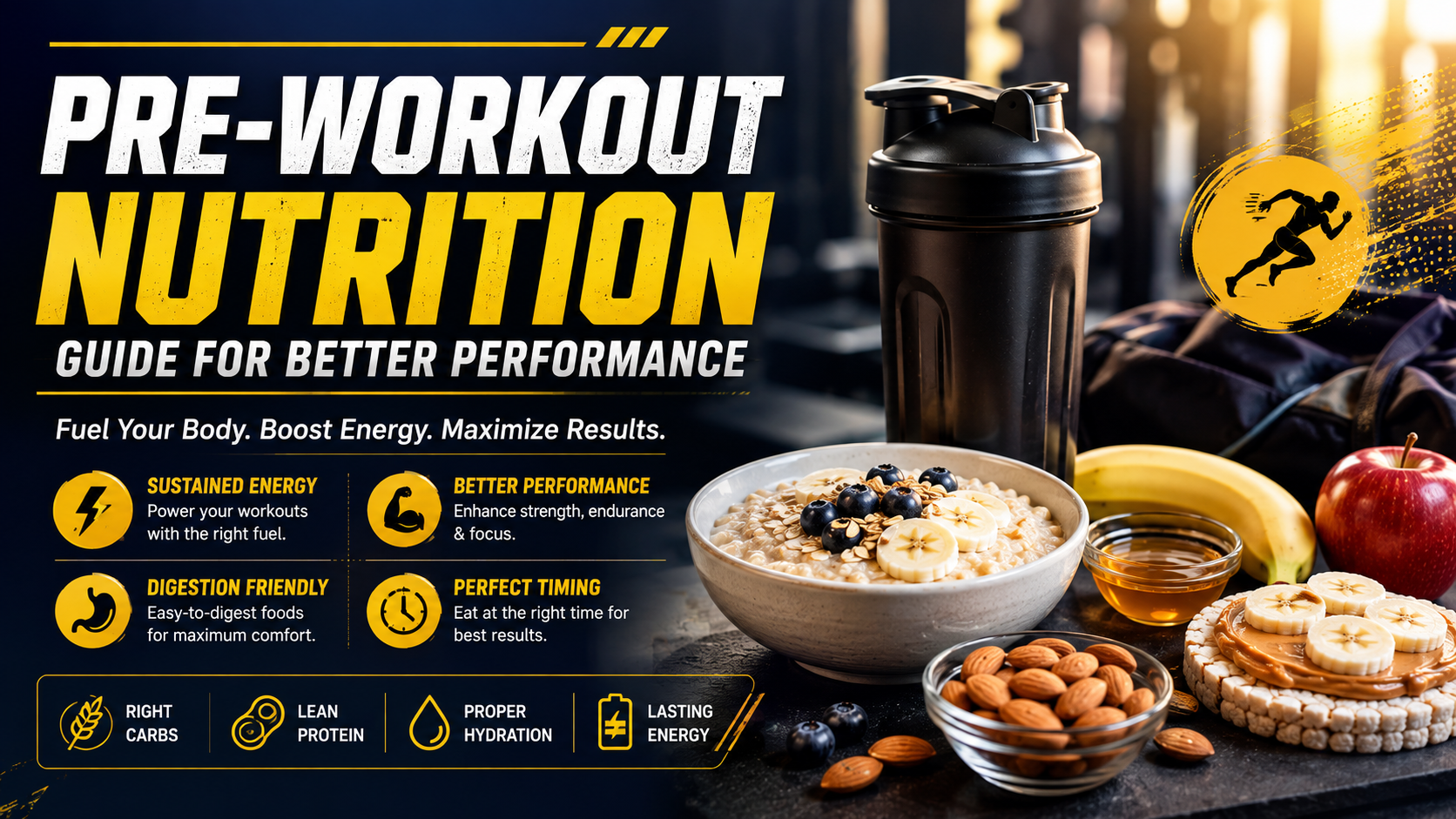
Have you ever walked into the gym feeling motivated, only to have your energy crash halfway through your first set? Or laced up for a run and felt like your legs were moving through wet cement? If you are consistently fighting fatigue, sluggishness, or a lack of power during training, your dedication is not the problem. Your pre-workout nutrition is.
At Sandhya Arora Fitness, we know that training hard is only one piece of the puzzle. What you put into your body before you step onto the gym floor dictates how much effort you can physically exert. Food is not just fuel, it is the biological instruction manual that tells your muscles how to perform, recover, and grow. Nailing your pre-training meals can be the difference between hitting a personal record and going home frustrated.
In this comprehensive guide, we dive deep into the science and strategy of fueling for exercise. We will break down exactly what to eat before a workout, how to time your meals, and how to structure your macros to unlock your ultimate workout energy. Whether you are lifting heavy, training for endurance, or just trying to stay fit, this guide gives you the practical tools you need for optimal workout fueling.
Before you move on, it is worth checking out our companion guide on how much protein athletes really need. Pairing the right pre-workout carbohydrate strategy with a correct daily protein target is what actually drives long-term strength and recovery.
Let us break down the exact strategies you need to maximize your athletic performance.
The Science of Fueling for Exercise
Before we talk about specific foods, it helps to understand what happens inside your body when you begin to exercise. When you start moving, your body immediately looks for energy to contract your muscles, pump blood, and keep your lungs working.
Your body primarily relies on adenosine triphosphate, or ATP, for immediate energy, but it can only store a tiny amount of it. To keep moving, your body must constantly produce more, and it does this by breaking down macronutrients, mostly carbohydrates and fats.
When you exercise at a high intensity, such as lifting heavy weights or sprinting, your body prefers carbohydrates because they can be broken down rapidly. These carbohydrates are stored in your muscles and liver as glycogen. If your glycogen stores are depleted because you have not eaten properly, your body will struggle to produce energy quickly enough. This is exactly when you hit the proverbial wall.
Proper pre-workout nutrition ensures that your glycogen stores are topped off, your blood sugar is stable, and your muscles have the amino acids they need to prevent excessive breakdown.
Understanding Pre-Workout Macros
To build the perfect pre-training meal, you need to understand the role of macronutrients, carbohydrates, proteins, and fats. Your pre-workout macros dictate how quickly your food digests and how efficiently it converts into usable energy.
Carbohydrates: Your Primary Energy Source
Carbohydrates are the undisputed kings of workout energy. As mentioned, they convert to glucose and are stored as glycogen. However, not all carbs are created equal when it comes to pre-workout meals.
- Complex carbohydrates: These digest slowly and provide a steady, sustained release of energy. They are perfect for meals consumed 2 to 3 hours before a workout. Examples include oatmeal, brown rice, sweet potatoes, and whole-grain bread.
- Simple carbohydrates: These digest incredibly fast and provide a rapid spike in blood sugar for immediate energy. They are ideal for quick pre-workout snacks consumed 30 to 60 minutes before training. Examples include bananas, rice cakes, dates, and fruit juice.
Protein: Muscle Protection and Preparation
While carbohydrates provide the energy to lift the weight, protein provides the building blocks to repair the muscle. Consuming protein before a workout increases muscle protein synthesis, the process of building muscle, and helps prevent muscle protein breakdown during your session.
Choose lean, easily digestible protein sources before training to avoid stomach upset. Excellent options include whey protein isolate, chicken breast, egg whites, or Greek yogurt.
Fats: Proceed with Caution
Dietary fats are fantastic for overall health and hormone production, but they are not ideal immediately before a workout. Fats slow down digestion. If you eat a high-fat meal right before training, the food sits heavy in your stomach, drawing blood flow toward digestion rather than your working muscles. This can lead to cramping, sluggishness, and nausea, so keep your pre-workout fat intake low as you get closer to training time.
How you weight each macro depends on the type of session ahead. Use the table below as a starting point and adjust based on how your body actually responds.
| Training Goal | Primary Macro Focus | Secondary Macro Focus | Macro Ratio (Carb : Protein : Fat) |
|---|---|---|---|
| Heavy strength training | Moderate carbs for power | High protein for muscle protection | 40% / 40% / 20% |
| High-intensity interval training | High carbs for rapid energy | Moderate protein | 50% / 30% / 20% |
| Endurance (running or cycling) | Very high carbs for sustained glycogen | Low protein | 60% / 20% / 20% |
| Active recovery or light yoga | Balanced, lower calorie | Balanced | 33% / 33% / 33% |
Mastering Pre-Workout Meal Timing
Knowing what to eat is only half the battle, knowing when to eat is where the real magic happens. Pre-workout meal timing is arguably the most critical factor in preventing digestive discomfort while ensuring maximum energy availability. Your digestive system needs time to process food, and the larger the meal, the more time you need before hitting the gym.
2 to 3 Hours Before: The Complete Meal
If you have a few hours before your workout, this is the perfect window for a complete, well-rounded meal containing complex carbohydrates, lean protein, and a small amount of healthy fat. Because you have plenty of time to digest, the fiber in complex carbs will not cause bloating during your session.
- Grilled chicken breast with a cup of quinoa and roasted asparagus.
- A large bowl of oatmeal topped with a scoop of whey protein, a sprinkle of chia seeds, and berries.
- Whole wheat wrap filled with turkey breast, spinach, and a light spread of avocado.
- Baked tofu with a side of sweet potato mash and steamed broccoli.
60 to 90 Minutes Before: The Top-Up Snack
Sometimes your schedule does not allow for a full meal hours in advance. At this stage, cut out fats entirely and reduce fiber, focusing instead on moderate-digesting carbs and liquid or fast-digesting protein.
- A cup of fat-free Greek yogurt with a drizzle of honey.
- A protein shake blended with half a banana.
- Two slices of sourdough bread with a thin layer of fruit jam and a side of egg whites.
- A small bowl of low-fiber cereal with skim milk or almond milk.
30 Minutes Before: The Quick Energy Burst
If you are rushing straight into a session, your sole focus is rapid workout energy. Reach for simple, fast-digesting carbohydrates that enter your bloodstream immediately. Protein should be liquid if consumed at all, and fiber and fat should be at zero.
- A handful of gummy sports chews or a specialized sports gel.
- One large, overripe banana.
- Two plain rice cakes with a light drizzle of honey.
- A glass of natural fruit juice, such as apple or grape juice.
| Timing Window | Meal Size | Carb Type | Protein Type | Fat & Fiber Limit |
|---|---|---|---|---|
| 2 to 3 hours | Large, full meal | Complex: oats, rice, potatoes | Solid: chicken, beef, tofu | Moderate |
| 60 to 90 minutes | Medium, light meal | Mixed: bread, fruit, yogurt | Fast: eggs, whey, yogurt | Low |
| 30 minutes | Small, quick snack | Simple: juice, honey, gummies | Liquid whey isolate only | Zero |
What to Eat Before a Workout: Real-World Scenarios
At Sandhya Arora Fitness, we know our clients live busy lives, so translating sports nutrition science into daily habits requires flexibility. Your pre-workout meals will look different depending on the time of day you train.
5:00 AM to 7:00 AM
The Early Morning Warrior
You have just woken from an 8-hour fast, so liver glycogen is significantly depleted. You do not have time to digest a full meal, so lean on a 30-minute quick energy burst instead. A heavy meal will sit in your stomach and cause nausea during heavy squats or sprints.
Quick fix: Drink 8 to 12 ounces of water on waking, eat a banana or two dates on the way to the gym, and sip half a scoop of whey isolate in water if you want protein.
12:00 PM to 2:00 PM
The Lunchtime Lifter
Your breakfast serves as your primary foundation of energy here. Eat a substantial, balanced breakfast rich in complex carbs and protein 3 to 4 hours before your workout, around 8:00 AM, so it is fully digested and stored as glycogen by noon.
Quick fix: If breakfast was light, grab a top-up snack around 11:00 AM, such as an apple and a small protein shake. Save your actual lunch for after the workout as your recovery meal.
5:30 PM to 8:00 PM
The Evening Athlete
The gap between lunch and an evening workout is often too large. Training on a 6-hour empty stomach lets your blood sugar crash, so plan a moderate meal or heavy snack around 3:30 to 4:00 PM.
Quick fix: Keep a stash of non-perishable snacks at your desk. Rice cakes, a shaker bottle with protein powder, or a bagel work well 90 minutes before you leave the office.
Quick Pre-Workout Snacks to Keep in Your Gym Bag
To ensure you never step into the gym under-fueled, keep these shelf-stable items in your gym bag or car:
- Rice cakes: the ultimate fast-digesting carb.
- Single-serve honey packets: perfect for a 15-minute emergency energy boost.
- Whey protein isolate packets: fast-digesting muscle protection that mixes instantly with water.
- Dried fruit such as dates or raisins for dense, concentrated carbohydrates.
- Electrolyte powder packets to ensure optimal hydration on the go.
Optimal Workout Fueling: The Overlooked Power of Hydration
When people think of optimal workout fueling, they almost always think of food. Hydration, however, is arguably the most acute performance enhancer available to you. Water transports nutrients to your working muscles and clears metabolic waste products like lactic acid. If you are dehydrated by even 2% of your body weight, your muscular endurance, strength, and cognitive focus will drop sharply.
Pre-Workout Hydration Protocols
You cannot chug a liter of water in the locker room right before your warm-up, that leads to a sloshing stomach and uncomfortable bloating. Hydration must be systematic and spread out leading up to your session.
- Baseline hydration: aim to drink at least half your body weight in ounces of water throughout the day. A 160 lb person should drink a minimum of 80 ounces daily.
- The 2-hour rule: consume 16 to 20 ounces of water roughly 2 hours before your workout, giving your body time to absorb the fluid and excrete any excess before training.
- The 15-minute top-off: drink an additional 8 to 10 ounces roughly 15 minutes before your warm-up.
The Role of Electrolytes
If you are training intensely, sweating heavily, or exercising in a hot environment, plain water is not enough. You lose vital electrolytes, specifically sodium, potassium, and magnesium, through your sweat, and sodium is critical for muscle contractions and nerve function.
Adding an electrolyte supplement to your pre-workout water can dramatically improve performance, prevent muscle cramps, and give you a stronger pump by pulling water into your muscle cells. Look for an electrolyte powder with at least 300 to 500 mg of sodium per serving if you are a heavy sweater.
| Time to Workout | Fluid Volume | Additional Add-Ins | Purpose |
|---|---|---|---|
| All day | Consistent sipping | None | Maintain systemic baseline hydration. |
| 2 hours out | 16 to 20 oz | Optional pinch of sea salt | Pre-load cellular fluid levels. |
| 15 minutes out | 8 to 10 oz | Electrolyte powder | Acute hydration and nerve firing support. |
| During workout | 4 to 8 oz every 15 min | Electrolyte powder if over 60 min | Replace fluids lost rapidly via sweat. |
Tailoring Pre-Workout Nutrition to Specific Dietary Preferences
At Sandhya Arora Fitness, we work with a diverse range of clients, each with unique dietary needs. The biological rules of fueling for exercise apply to everyone, but the food sources can be tailored to fit your lifestyle.
Plant-Based or Vegan
2 hours out: lentil pasta with a light tomato sauce and steamed spinach. 60 minutes out: a slice of sourdough topped with a thin layer of almond butter and sliced banana.
Gluten-Free
2 hours out: grilled chicken with a large serving of jasmine rice and zucchini. 60 minutes out: gluten-free oats or plain rice cakes with honey.
Low-Carb or Keto
2 hours out: a fatty cut of steak or salmon with avocado. 60 minutes out: coffee blended with MCT oil, which bypasses normal fat digestion and converts rapidly into usable ketones.
Plant-based athletes often have an advantage with carbohydrate intake since vegan diets are naturally carb-rich, though the challenge is avoiding excess fiber right before training. Keto-adapted athletes can still fuel effectively, though high-intensity output may be slightly blunted without carbohydrates in the mix.
Common Pre-Workout Mistakes to Avoid
Even with the best intentions, many gym-goers sabotage their workout energy with a few common nutritional errors. Make sure you are not falling into these traps:
- Consuming too much fiber: fiber is great for digestive health, but a massive bowl of broccoli or high-fiber bran cereal right before training severely slows gastric emptying, leaving food trapped in your stomach while you work out.
- Trying new foods on game day: never experiment with a new food or supplement before an important session or competition. Stick to foods you know digest easily and save the experimenting for rest days.
- Relying solely on stimulants: pre-workout supplements loaded with caffeine can increase alertness, but caffeine is a stimulant, not fuel. If you take a heavy stimulant without eating carbohydrates, you are revving an engine with no gas in the tank, and you will eventually crash hard.
- Ignoring post-workout recovery: today's post-workout meal is tomorrow's pre-workout fuel. Skimping on protein and carbs after your session means your muscles will not be properly restored for your next trip to the gym.
Frequently Asked Questions
What should I eat 30 minutes before a workout?
Stick to simple, fast-digesting carbohydrates with almost no fat or fiber, such as a ripe banana, a couple of plain rice cakes with honey, or a glass of fruit juice. If you want protein, keep it liquid, like a small sip of whey isolate mixed with water.
How long before a workout should I eat a full meal?
Aim to finish a complete meal with complex carbohydrates, lean protein, and a little healthy fat about 2 to 3 hours before training. That gives your stomach enough time to digest so blood flow can go to your working muscles instead of your gut.
Is it bad to work out on an empty stomach?
It depends on the person and the session. Short, low-intensity workouts are usually fine fasted, but for heavy strength training or longer sessions, low glycogen stores can lead to fatigue, dizziness, and reduced power output. A small carbohydrate snack beforehand generally improves performance.
Should I eat fat before a workout?
Keep dietary fat low immediately before training. Fat slows digestion and can leave food sitting heavy in your stomach, which diverts blood flow away from your muscles and can cause cramping or nausea during exercise.
What is the best drink before a workout for hydration?
Plain water is enough for most moderate sessions if you hydrate consistently through the day. For longer or high-intensity training, or if you sweat heavily, add an electrolyte drink containing sodium, potassium, and magnesium about 15 minutes before you begin.
Conclusion and Your Next Steps
Optimizing your pre-workout nutrition is one of the fastest, most effective ways to break through plateaus and elevate your fitness journey. By balancing your pre-workout macros, mastering meal timing, and staying dedicated to your hydration protocols, you give your body the exact fuel it needs to perform at its peak.
There is no one-size-fits-all approach to nutrition. The best pre-workout meals are the ones that digest well for your specific body and fit seamlessly into your daily schedule. Start experimenting with the timelines, checklists, and tables in this guide, pay close attention to how your energy feels during your next few sessions, and adjust your carb intake and timing accordingly.
Education is empowerment, but applying it to your unique physiology is where the real results happen.
Ready to take the guesswork out of your nutrition and training? Get access to our free, easy-to-follow nutrition guides designed specifically for optimal performance, or book a one-on-one personal coaching consultation with our expert team. Let us build a customized training and nutrition protocol tailored precisely to your goals, your schedule, and your life.
Fuel smart, train hard, and we will see you on the gym floor.