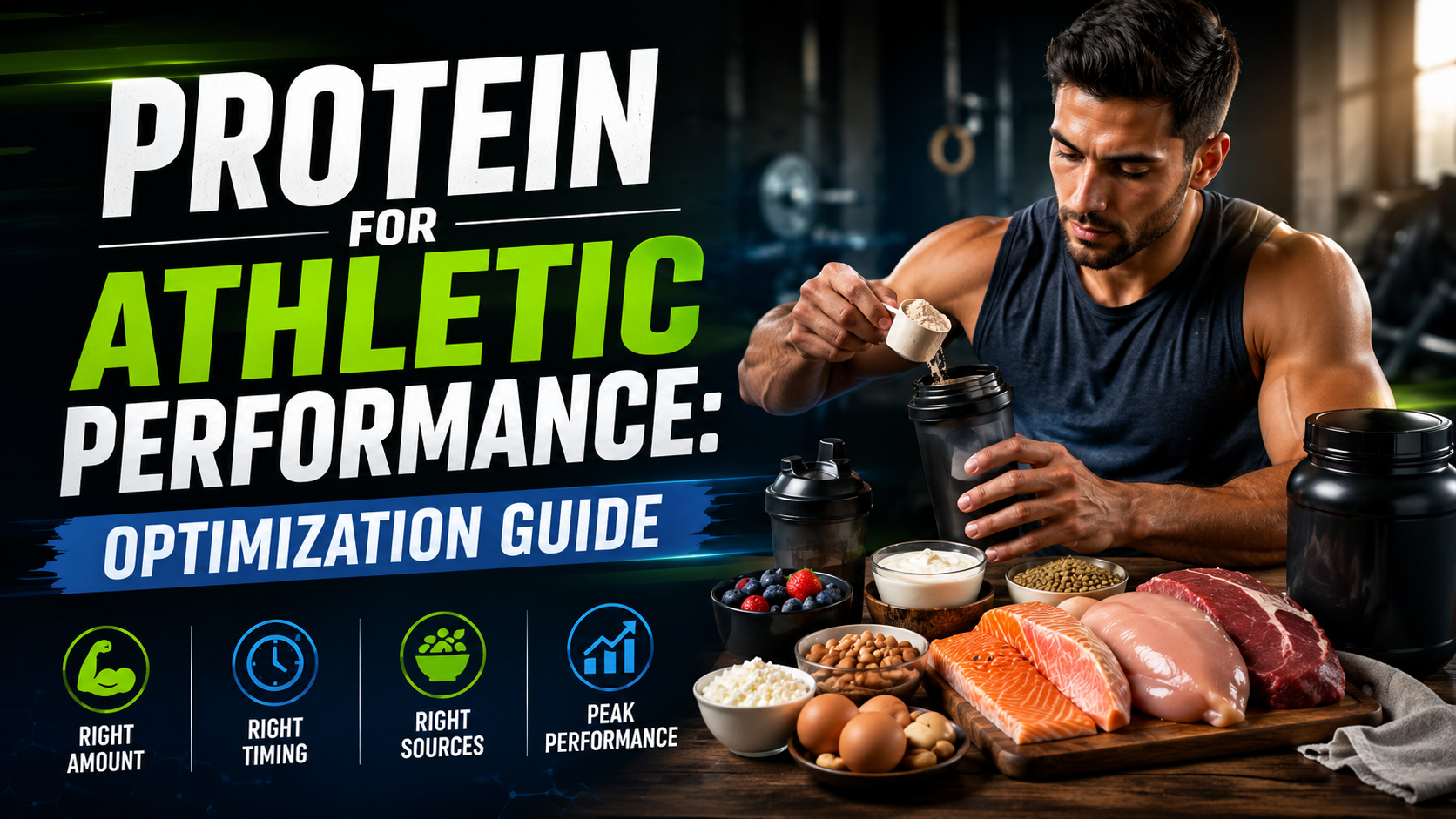
Whether you are pushing through a grueling heavy lifting session, crushing a high-intensity interval workout, or logging long miles on the pavement, your body undergoes immense physical stress. You are breaking down muscle tissue, depleting energy stores, and pushing your physiological limits. To bounce back stronger, faster, and more resilient, you need the ultimate nutritional building block: protein.
However, mastering protein for athletic performance requires much more than simply chugging a generic shake after you leave the gym. True athletic optimization is a science. It is about understanding exactly how much you need, precisely when you should consume it, and the absolute best sources to fuel your specific goals. Navigating the endless sea of conflicting fitness advice can be incredibly overwhelming, leaving many dedicated athletes under-fueled and frustrated with stagnant progress.
That is exactly why we created this comprehensive guide. We are stripping away the confusing jargon and delivering pure, actionable nutrition tactics. By the end of this post, you will understand exactly how to build a powerful muscle recovery diet tailored to your body, your training style, and your goals. Let's dive into the science of fueling your peak performance.
Before we move forward, don't forget to check out our previous guide, Human Performance Nutrition Guide to Maximize Strength and Endurance, for the complete framework behind macros, hydration and pre and post-workout fueling.
Understanding the Foundation: Muscle Protein Synthesis and Amino Acids
Before we calculate your daily targets, you need to understand exactly what protein does inside your body. When you engage in intense physical training, you are actually creating microscopic tears in your muscle fibers. This breakdown is a natural and necessary part of getting stronger. However, the true growth and adaptation do not happen during the workout itself. They happen during your recovery.
This recovery process is driven by muscle protein synthesis (MPS). MPS is the biological mechanism where your body repairs those micro-tears by building new muscle proteins. For your body to successfully initiate and sustain MPS, it requires raw materials. Those raw materials are amino acids.
Amino acids for muscle growth are often referred to as the "building blocks" of protein. There are 20 different amino acids that make up protein, but nine of them are classified as "essential." Your body cannot produce these essential amino acids (EAAs) on its own, so you must obtain them directly through your diet. Among these essential amino acids, one called leucine acts as the primary trigger, essentially flipping the biological switch that turns on muscle protein synthesis.
If your daily protein intake for athletes is chronically low, your body remains in a catabolic state, meaning it breaks down more muscle tissue than it builds. To achieve peak athletic performance, you must shift your body into an anabolic, or muscle-building, state by providing a consistent, high-quality supply of dietary protein.
Decoding Daily Protein Intake: How Much Do You Actually Need?
The standard dietary guidelines for the average sedentary adult suggest roughly 0.8 grams of protein per kilogram of body weight. For a hard-training athlete, this baseline is drastically insufficient. Athletic training increases your body's demand for amino acids to repair tissue, support immune function, and maintain lean body mass.
So, what is the optimal daily protein intake for athletes? The exact number depends heavily on your specific sport, training volume, and body composition goals. Use the table below to find your ideal daily intake: locate your training style and multiply your current body weight in kilograms or pounds by the suggested range. To convert your weight from pounds to kilograms, divide your weight in pounds by 2.2.
| Athlete Profile | Primary Goal | Daily Protein Target | Actionable Example |
|---|---|---|---|
| Strength & Power (Weightlifters, Powerlifters, Sprinters) | Maximum hypertrophy, explosive power, heavy tissue repair | 1.6 to 2.2 g/kg (0.7 to 1.0 g/lb) | 180 lb powerlifter: about 126 to 180g daily |
| Endurance (Runners, Cyclists, Triathletes) | Repairing repetitive impact damage, supporting energy metabolism | 1.2 to 1.4 g/kg (0.55 to 0.65 g/lb) | 140 lb marathon runner: about 77 to 91g daily |
| Team Sport & Hybrid (CrossFit, Soccer, Basketball, Martial Arts) | Balancing strength, agility and cardiovascular endurance | 1.4 to 1.7 g/kg (0.65 to 0.77 g/lb) | 165 lb CrossFit athlete: about 105 to 127g daily |
| Athletes in a Caloric Deficit (Cutting Weight) | Preserving lean muscle mass while losing body fat | 2.0 to 2.4 g/kg (0.9 to 1.1 g/lb) | Protein needs rise as calories drop to prevent muscle loss |
Grab a calculator right now. Determine your weight in kilograms or pounds, select the category that best matches your primary training style, and calculate your daily protein range. Write this target number down. This is the foundation of your new high protein diet plan.
The Strategy of Protein Timing and Pacing
Hitting your total daily protein target is the most critical factor for success. However, once you have that baseline established, protein timing becomes the next powerful lever you can pull to optimize your results.
Your body does not store protein for later use in the same way it stores carbohydrates as glycogen or fats. Instead, your bloodstream maintains a temporary pool of amino acids. If you consume 100 grams of protein in a single massive meal and eat nothing for the rest of the day, you are not maximizing muscle protein synthesis. Your body can only utilize a certain amount of protein for muscle repair in one sitting, and the excess is oxidized for energy or excreted.
The Power of Protein Pacing
To maximize athletic performance, you must practice "protein pacing." This involves evenly distributing your daily protein intake across multiple meals and snacks throughout the day. This constant drip-feed of amino acids ensures that your body remains in a continuous state of recovery and growth.
- Divide and conquer: Divide your total daily protein target by the number of meals you prefer to eat, usually 4 to 5.
- The minimum threshold: Aim for a minimum of 20 to 40 grams of high-quality protein per meal. This specific dose contains enough leucine, roughly 2.5 to 3 grams, to effectively trigger muscle protein synthesis.
- The 3 to 4 hour rule: Space your protein-rich meals and snacks approximately 3 to 4 hours apart.
Here is an example pacing schedule for a 150g daily target:
| Meal | Approx. Time | Protein Target |
|---|---|---|
| Breakfast | 8:00 AM | 30g |
| Lunch | 12:00 PM | 35g |
| Pre-Workout Snack | 4:00 PM | 25g |
| Post-Workout | 6:30 PM | 30g |
| Dinner / Pre-Bed | 9:00 PM | 30g |
Pre-Bed Protein: The Overnight Recovery Hack
When you sleep, you are fasting for 7 to 9 hours. Consuming a specific type of slow-digesting protein before bed can significantly enhance overnight muscle recovery. Casein protein, found heavily in dairy products like cottage cheese or Greek yogurt, coagulates in the stomach, providing a slow, steady release of amino acids while you sleep. Aim for 30 to 40 grams of a casein-rich source 30 to 60 minutes before bedtime to support optimal overnight tissue repair.
The Post-Workout Protocol: Capitalizing on the Recovery Window
For decades, the fitness industry hyped up the "anabolic window," the idea that you had exactly 30 minutes after training to consume a protein shake, or your workout was entirely wasted. Modern sports science has shown that this window is actually much wider than we previously thought, remaining open for several hours.
However, consuming post-workout protein promptly is still highly recommended, especially if you train fasted, if you have two training sessions in a single day, or if you simply struggle to hit your total daily targets.
After a strenuous workout, your muscles are primed and highly receptive to nutrients. Delivering a fast-digesting protein source alongside some carbohydrates helps immediately halt muscle breakdown, replenish depleted glycogen stores, and kickstart the rebuilding phase.
Your Post-Workout High-Protein Snack Checklist
Keep this checklist handy for immediate post-training recovery. Choose snacks that are convenient, easy to digest, and pack at least 20 to 30 grams of protein.
- The classic shake: 1 scoop of high-quality whey or plant-based protein powder blended with water or almond milk.
- Greek yogurt parfait: 1 cup of plain, non-fat Greek yogurt topped with a handful of berries and a drizzle of honey.
- Cottage cheese & pineapple: 1 cup of low-fat cottage cheese paired with fresh pineapple chunks; the enzymes aid digestion and the carbs replenish energy.
- Tuna or chicken pouch: 1 ready-to-eat pouch of lean tuna or chicken breast on whole-grain crackers.
- Protein oatmeal: 1/2 cup of rolled oats cooked with milk, with half a scoop of protein powder stirred in after cooking.
- Chocolate milk: A simple, highly effective, and budget-friendly recovery drink containing an ideal ratio of fast-digesting carbs to protein.
Analyzing the Best Protein Sources for Athletes
Not all protein is created equal. The quality of a protein source is determined by its amino acid profile and its bioavailability, meaning how easily your body can digest and absorb it. When building a muscle recovery diet, you want to prioritize "complete" proteins, which are sources that contain all nine essential amino acids in adequate amounts.
Animal-based proteins are naturally complete and highly bioavailable. Plant-based proteins can absolutely support elite athletic performance, but they require a bit more strategic planning to ensure you are getting a complete amino acid profile throughout the day.
Whey vs Plant Protein: The Ultimate Showdown
Fast Digesting
Whey Protein
- Derived from cow's milk during the cheese-making process
- Exceptionally high bioavailability and rapidly digested
- Contains the highest concentration of the muscle-building amino acid, leucine
Best for: Immediate post-workout recovery when fast absorption is critical.
Plant Based
Plant Protein (Pea, Rice, Hemp, Soy)
- Often blended, for example pea and brown rice, to create a complete amino acid profile
- Generally digests a bit slower than whey
- Ideal for varied dietary needs and preferences
Best for: Vegan or vegetarian athletes, individuals with dairy allergies or lactose intolerance, and general daily pacing.
Both options are highly effective for supporting muscle protein synthesis and athletic recovery. The choice ultimately comes down to your dietary preferences, digestive tolerance, and ethical beliefs.
Use this reference table to diversify your grocery list and choose high-quality, nutrient-dense options for your high protein diet plan.
| Protein Source | Serving Size | Protein (g) | Digestion Speed | Complete Profile | Best Use Case |
|---|---|---|---|---|---|
| Chicken Breast | 4 oz (113g) cooked | 35g | Moderate | Yes | Lunch or dinner staple |
| Lean Beef (93/7) | 4 oz (113g) cooked | 30g | Slow to Moderate | Yes | Iron-rich meal for recovery |
| Salmon | 4 oz (113g) cooked | 28g | Moderate | Yes | Evening meal, adds Omega-3s |
| Eggs (Whole) | 3 large eggs | 18g | Moderate | Yes | Breakfast or versatile snack |
| Greek Yogurt (Non-fat) | 1 cup (227g) | 20 to 23g | Slow | Yes | Pre-bed snack or breakfast |
| Cottage Cheese | 1 cup (226g) | 25g | Very Slow | Yes | Optimal pre-bed recovery |
| Tofu (Firm) | 1/2 cup (126g) | 22g | Moderate | Yes, soy | Plant-based lunch or dinner |
| Lentils | 1 cup cooked | 18g | Slow | Needs pairing | Complex carb + protein meal |
| Edamame | 1 cup cooked | 17g | Moderate | Yes, soy | High-protein afternoon snack |
| Whey Isolate | 1 scoop (~30g) | 25g | Very Fast | Yes | Immediate post-workout |
| Pea/Rice Blend | 1 scoop (~30g) | 22 to 25g | Fast to Moderate | Yes, blended | Vegan post-workout |
Step-by-Step: Building Your High Protein Diet Plan
Knowledge without application is useless. Now that you have calculated your total daily needs, understand the importance of timing, and know the best protein sources for athletes, it is time to build your practical, everyday meal plan. Follow these actionable steps to transition your current eating habits into an optimized athletic diet.
Track Your Baseline
For three consecutive days, use a food tracking app to record everything you eat and drink without changing your habits. Most athletes are shocked to find they are falling 40 to 60 grams short of their target.
Anchor Your Meals with Protein
Reverse your meal prep psychology. Ask "what is my protein source for this meal?" first, choose a robust 30 to 40g anchor, then build the rest of your plate with complex carbs and healthy fats.
Prep Your Emergency Snacks
Have high-protein, non-perishable snacks ready in your gym bag, car, and desk: think jerky, dry roasted edamame, protein bars, or individual protein powder packets.
Hydrate Consistently
High protein diets need adequate hydration to help your kidneys process nitrogen waste. Aim for at least half your body weight in ounces of water daily, plus fluids to replace training sweat.
This is exactly the kind of week-by-week calibration our nutrition coaching programs are built to guide you through.
Overcoming Common Myths and Dietary Pitfalls
Even well-intentioned athletes can fall into nutritional traps. Let's clear up some of the most pervasive myths surrounding protein for athletic performance.
Myth 1: More protein automatically equals more muscle
Your body has a physiological limit on how fast it can synthesize new muscle tissue. Once you hit the upper threshold of the formulas provided earlier, around 2.2g per kg of body weight, consuming additional protein will not magically build extra muscle. Instead, those excess calories will either be burned for energy or stored as fat. Stick to the scientifically backed ranges.
Myth 2: High protein diets will destroy your kidneys
This is a long-standing myth that has been thoroughly debunked by sports science. For healthy individuals with no pre-existing kidney disease, a high-protein diet is perfectly safe. Your kidneys are highly efficient filtration systems designed to handle the byproducts of protein metabolism, provided you remain adequately hydrated.
Myth 3: You must eat meat to perform at an elite level
While animal proteins are highly efficient, an increasing number of elite athletes are proving that plant-based diets can support peak performance. The key for plant-based athletes is variety and volume. By combining different plant sources, like beans and rice, and utilizing high-quality vegan protein powders, you can easily meet your complete amino acid requirements.
Myth 4: Protein is the only macronutrient that matters for recovery
Athletes often develop "protein tunnel vision," neglecting carbohydrates and healthy fats. Protein builds the muscle, but carbohydrates provide the fuel necessary for high-intensity training and the energy required for the muscle repair process itself. Ignoring your carbohydrate needs will leave you feeling flat, fatigued, and unable to perform at your best, regardless of how much protein you consume.
Final Thoughts: Consistency Is the Ultimate Performance Enhancer
Optimizing your protein intake is one of the most powerful and immediate ways to elevate your athletic performance, accelerate your recovery, and change your body composition. By calculating your specific daily targets, implementing strategic protein pacing, and selecting high-quality sources, you are giving your body the exact raw materials it needs to adapt to your training demands.
Remember that nutrition, much like athletic training, requires patience and unwavering consistency. You will not see dramatic results from hitting your protein target for a single day. The magic happens when you execute this strategy day after day, week after week. Use the formulas, checklists, and tables provided in this guide to build a sustainable, powerful muscle recovery diet that integrates seamlessly into your lifestyle.
You have the tools, the tables, and the tactics. Now it is time to put them into practice.
Dialing in your nutrition is a highly individualized process, and sometimes you need expert guidance to break through plateaus and achieve your true potential. At Sandhya Arora Fitness, we specialize in taking the guesswork out of sports nutrition and training. If you are tired of generic advice and want a customized strategy tailored exactly to your body, your sport, and your lifestyle, we are here to help.
Visit our homepage to download free, actionable meal plans and sports nutrition guides designed specifically for dedicated athletes, or book a one-on-one personal coaching consultation with our expert coaching team. Let's build your ultimate roadmap to peak performance together.