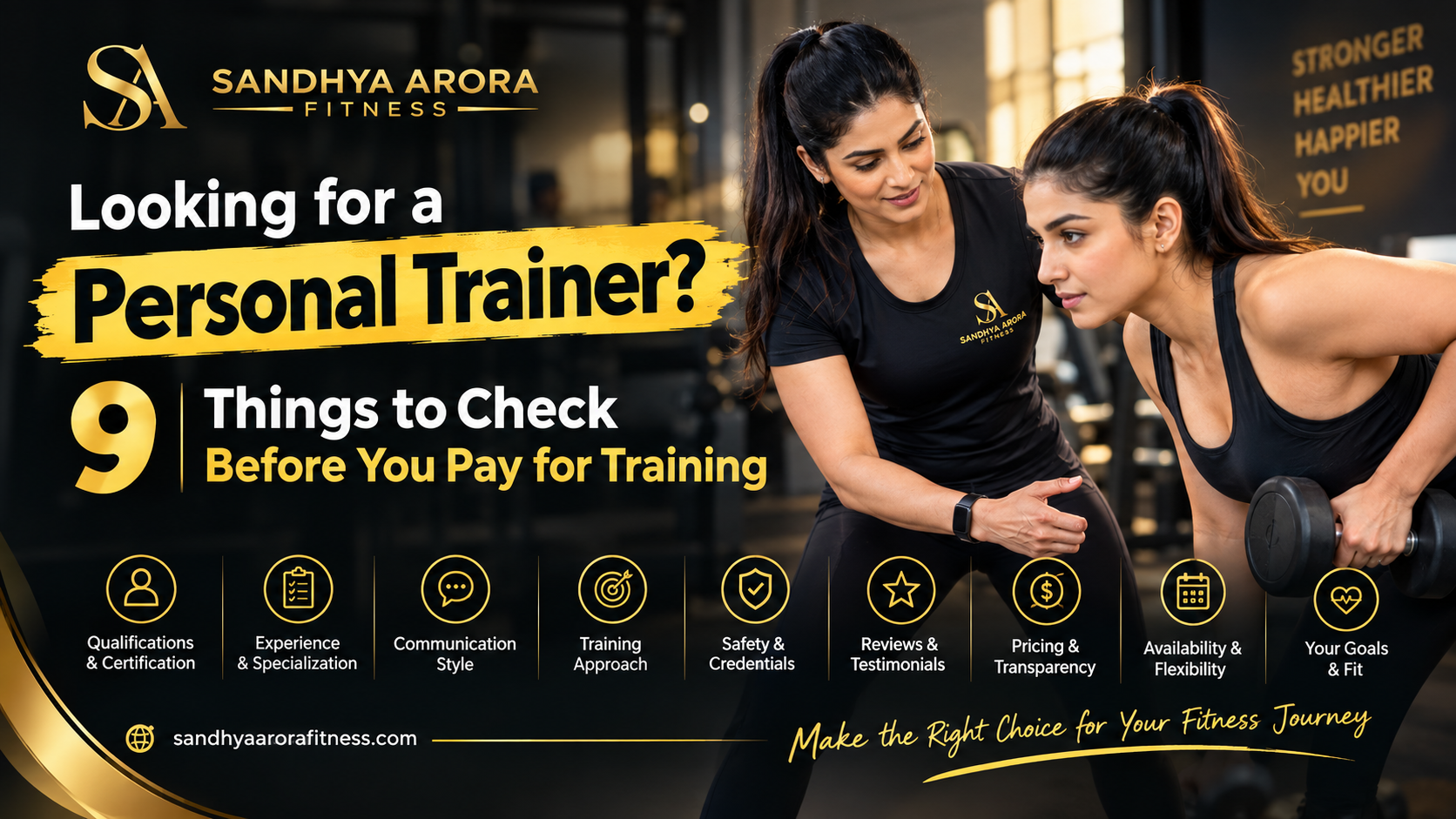
Choosing a personal trainer is about more than finding someone who knows exercises. The right coach should understand your goals, explain their approach, keep training safe, and make the cost and terms clear before you commit.
This guide is for anyone comparing a fitness trainer, whether you are searching for a fitness trainer near me, considering a coach at your gym, or comparing remote personal training. Use the checklist in a conversation, not as a reason to chase impressive claims or pressure yourself into a package.
9 things to check before you pay for training
1. Relevant qualifications and current credentials
Ask what training or education qualifies the coach to work with clients like you. A fitness trainer certificate is useful context, but it is not the whole picture: ask who issued it, what topics it covered, whether it is current, and whether the trainer pursues continuing education. First-aid and CPR training are also sensible questions, especially for in-person sessions.
There is no single credential that automatically makes a coach right for every person. Look for relevant learning, practical experience, and an ability to explain exercise choices clearly. If you have a health condition, injury, or other medical concern, ask whether the trainer has appropriate experience and when they would refer you to a qualified healthcare professional.
2. A real conversation about your goals and starting point
A good personal trainer asks questions before prescribing a program. Expect a discussion about what you want to achieve, your current activity, previous training, schedule, equipment, preferences, and any movements that cause discomfort. The coach should also ask what success means to you, rather than assuming it is only weight or appearance.
Notice whether they listen and clarify, or jump straight to a one-size-fits-all plan. Your initial assessment should help the trainer make sensible decisions; it should not feel like a diagnosis or a promise of a particular result.
3. A plan that is personal, explainable and adaptable
Ask how your sessions will be structured and how the plan changes as you gain skill or strength. A fitness trainer personal to your needs should be able to explain why the exercises, training frequency, and progression suit your goals and experience. They should also have alternatives for busy weeks, limited equipment, or movements that do not feel right.
Good coaching is not a fixed set of punishing workouts. It balances challenge with recovery and adjusts when your circumstances change. Ask how the trainer decides when to progress, repeat, or modify an exercise.
4. Safety, technique and clear limits
Before you pay, ask how the trainer teaches technique, monitors effort, and responds if something hurts. In person, watch whether they can see you clearly and give useful, respectful feedback. Online, ask how they check your setup and movement, what camera view is needed, and how they adapt exercises without hands-on supervision.
A trainer should not diagnose injuries, promise to treat medical problems, or pressure you to train through sharp pain. You should feel able to pause, ask questions, and report discomfort without being shamed. When medical advice is needed, a responsible coach will recommend speaking with an appropriate clinician.
5. A coaching style that works for you
Some people want direct cues; others prefer a calm, collaborative approach. Neither style is automatically better. Ask how the coach gives corrections, handles missed sessions, and supports motivation on difficult weeks. A short introductory call can help you decide whether you can communicate openly with this person.
You are hiring a professional relationship, not just buying an exercise list. Respect, clear boundaries, and a pace that feels challenging but manageable matter for long-term consistency.
6. Specific communication and progress reviews
Clarify what support is included outside a session. Will you receive a written plan, check-ins, exercise demonstrations, or feedback on your form? How quickly should you expect a reply, and which channel will you use? If the trainer uses an app for fitness trainer check-ins or workout logging, ask what information it tracks and who can see it.
Agree on a few practical ways to review progress, such as consistency, strength, movement confidence, or energy. A coach should explain what gets reviewed and how your plan will respond; they should not guarantee a specific transformation or rely on a single measurement.
7. Credible experience and client feedback
Look for experience that relates to your needs, not simply the largest number of testimonials. Ask how the trainer has supported people with similar goals, training histories, schedules, or constraints. Reviews can offer useful clues about communication and reliability, but remember that another client's results cannot predict yours.
Be cautious if every example is presented as a guaranteed outcome, if reviews cannot be verified, or if you are pushed to share sensitive health information or photos. Your progress and privacy should be handled respectfully.
8. A location and schedule you can sustain
If you are searching for a personal trainer near me, consider more than distance. Check travel time, session availability, the training environment, equipment, and what happens when either of you needs to reschedule. A nearby coach you cannot book consistently may be a worse fit than a flexible option that works with your routine.
In Delhi, compare the actual session location and travel arrangements rather than relying on a broad “near me” result. You can review our Delhi fitness coaching information and explore one-to-one personal training. If getting to a location is difficult, ask whether online coaching suits your goals and equipment.
9. The complete price and written terms
Ask for the total price and exactly what it includes before you pay. Confirm session length and frequency, assessment fees, any extra charges, package expiry, payment schedule, cancellation notice, rescheduling limits, refunds, and how to pause a plan. If the offer is time-limited, take time to read the terms instead of deciding under pressure.
Compare value, not just the lowest per-session number. Individual coaching, online support, group classes, and hybrid plans include different levels of access. Our personal training pricing page outlines the available options; ask us to confirm current inclusions and terms for the plan you are considering. For a deeper comparison, read what affects personal training costs.
Should you choose an in-person trainer or online coaching?
The best format is the one that supports safe, consistent training and fits your preferences. Use this comparison to guide questions, then check the coach's actual process rather than assuming every trainer offers the same service.
| Consideration | In-person training | Online coaching |
|---|---|---|
| Coaching | Live observation and immediate verbal cues during a session. | Remote sessions or plan-based coaching; ask how form feedback and check-ins work. |
| Convenience | Depends on travel, venue and available appointment times. | Can reduce travel and offer more location flexibility; needs a suitable space and connection. |
| Best question to ask | How do you adapt sessions to the equipment and space at this location? | How do you review technique and modify my plan when you are not physically present? |
For either option, look for a trainer who explains the coaching process and makes it easy to ask for adjustments. Explore our online fitness coaching and group fitness classes if you want to compare other formats. You can also read our guides to at-home personal training and online fitness training.
Red flags to notice before committing
- Guaranteed rapid weight loss, a “secret” method, or results promised to everyone.
- Pressure to pay immediately or buy a long package before you understand the service.
- No clear answers about credentials, session supervision, fees, cancellations, or refunds.
- Advice to ignore pain, stop prescribed care, or follow extreme food or exercise rules.
- Before-and-after images used as proof that you will get the same result.
- Unclear privacy practices for progress photos, health information, or app data.
One awkward answer does not tell the whole story, but repeated evasiveness or pressure is a good reason to slow down and compare alternatives.
Questions to ask at your first consultation
- What experience and qualifications are most relevant to my goals?
- How will you assess my starting point and adapt my training plan?
- How do you teach technique and respond to pain or a new limitation?
- What support is included between sessions, and when can I expect replies?
- How will we review progress and decide whether to change the plan?
- What is the total cost, and what do cancellation, pause and refund terms say?
Take notes and compare answers from more than one coach if you can. A clear consultation should leave you better informed, not obligated to sign up.
Frequently asked questions
How do I check whether a personal trainer is qualified?
Ask to see the trainer's current fitness trainer certificate, confirm who issued it and what it covers, and ask about first-aid training and experience with clients who have goals like yours. Consider the trainer's communication and practical coaching skills alongside credentials.
Should I choose a personal trainer near me or train online?
Choose the format you can attend consistently. In-person training offers live, hands-on coaching; online coaching can offer schedule flexibility and remote feedback. Compare communication, supervision and support before deciding.
What should I ask before paying for personal training?
Ask what the price includes, how sessions are scheduled, how cancellations work, whether there is an assessment or trial consultation, how progress is reviewed, and what happens if you need to pause.
Should I pay for a long personal-training package upfront?
Understand the written terms first. Check the total price, expiry date, cancellation and refund rules, and the process for pausing or rescheduling. Start with a shorter commitment if you are unsure about the coaching fit.
Choose a trainer you can trust and keep showing up with
The right fitness trainer combines relevant knowledge with safe coaching, clear communication, a plan that adapts, and transparent terms. Use these nine checks to compare options on what matters to you, not on pressure or promises.
For more help deciding what kind of support fits your goals, explore our personal fitness training service, see pricing and plan details, or browse the fitness and training blog. If you have a medical condition or persistent pain, speak with a qualified healthcare professional before starting a new exercise program.